Updated fuel prices Malaysia (26 Feb – 4 Mar 2026) – APM weekly update
Fuel costs affect every Malaysian driver’s monthly budget — especially petrol and diesel prices.
If you’re planning road trips, daily commutes, or managing a fleet, knowing this week’s fuel prices helps you plan expenses better.
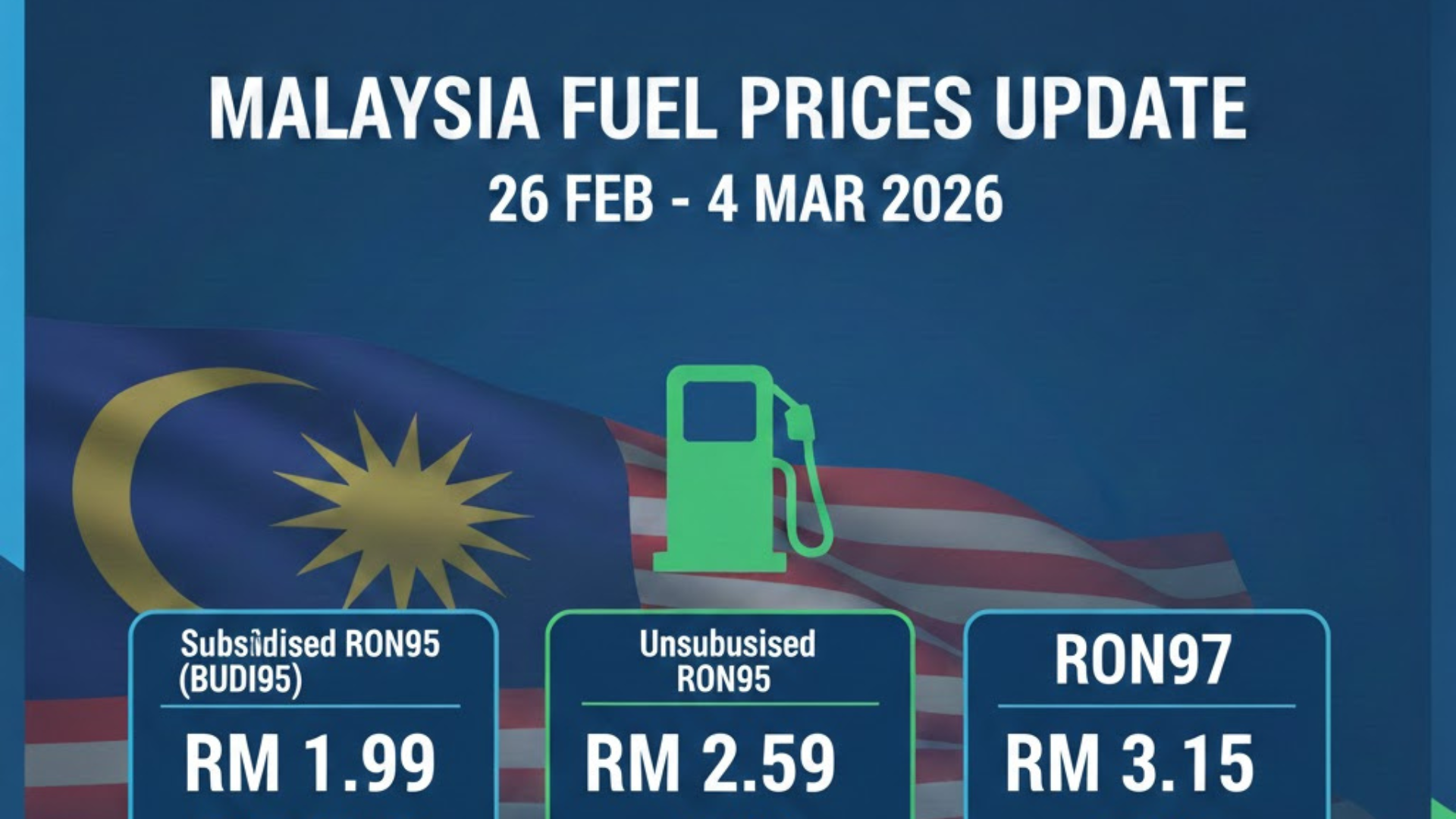
Here’s the full weekly fuel price update announced by the Ministry of Finance (MoF) under Malaysia’s Automatic Pricing Mechanism (APM), valid from 26 February to 4 March 2026.
Weekly fuel price summary (26 Feb – 4 Mar 2026)
Petrol prices
Subsidised RON95 (BUDI95): RM 1.99 per litre — unchanged
Unsubsidised RON95: RM 2.59 per litre up by 5 sen
RON97: RM 3.15 per litre up by 5 sen
RON100: ~RM 5.00 per litre -reported reference price
Diesel prices
Peninsular Malaysia: RM 3.04 per litre up by 5 sen
Sabah, Sarawak & Labuan: RM 2.15 per litre unchanged
These rates are in effect midnight on 26 February until the next weekly update on 4 March 2026.
Why fuel prices change weekly
Malaysia’s fuel pricing uses an Automatic Pricing Mechanism (APM) — a formula that reflects global crude oil market conditions and currency shifts. When international oil prices rise, local pump prices often adjust to match costs more closely, while trying to minimise sudden spikes for consumers.
How APM works
Global oil price trends set the baseline for pricing.
Refined product costs (like RON97 or diesel) are calculated weekly.
Government subsidy factors (e.g., BUDI95) may hold some prices stable for targeted groups.
Weekly prices are published to ensure transparency for consumers and businesses.
This system helps balance market realities with consumer affordability.
What this means for Malaysian drivers
Whether you drive a Perodua Myvi, Proton X50, Honda City, Toyota Hilux, or ride a motorcycle, these price changes can affect your wallet:
Petrol-powered vehicles
RON95 BUDI95 remains a budget-friendly option for Malaysian-registered vehicles.
Unsubsidised RON95 and RON97 have increased, so planning refuels when prices are stable helps control fuel spend.
Diesel vehicles
Diesel for commercial vehicles, vans, or pickup trucks increased slightly in Peninsular Malaysia, which may marginally raise transport or delivery costs.
Prices in Sabah, Sarawak & Labuan remained steady, which is good news for drivers in East Malaysia.
Historical context: fuel price trends
Weekly price updates show fluctuation over time. For example:
Earlier in February 2026, prices rose in response to global oil markets.
Prior months saw minor dips or stability as international oil trends shifted.
Tracking these patterns helps motorists forecast fuel budgeting and travel plans more accurately over weeks or months.
If you regularly monitor fuel costs, you’ll notice that increases often correlate with global crude price upticks, while decreases follow market softening.
Tips for Malaysian drivers
Maximise fuel savings with these practical strategies:
Choose BUDI95 when possible: For Malaysians with eligible vehicles, this subsidy program offers the lowest petrol price.
Monitor weekly price updates: Plan long trips around stable or downward pricing weeks.
Use ride-sharing or carpooling: Spread fuel costs across passengers.
Maintain proper tyre pressure: Reduces rolling resistance and improves fuel efficiency.
Keep engines tuned: Regular servicing (air filters, spark plugs) boosts fuel economy.
These small steps help offset rising weekly fuel costs.
What affects diesel pricing
Diesel prices are also influenced by:
Demand for freight transport
International diesel and crude benchmarks
Refining cost variances
Seasonal industrial activity
Because diesel powers many goods and logistics vehicles, price increases can slightly ripple into goods delivery costs and everyday living expenses.
Frequently asked questions [FAQ]
1: Why is RON95 still cheaper than other fuels?
RON95 petrol under the BUDI95 targeted subsidy scheme is maintained at RM 1.99 to support affordability for Malaysian vehicle owners registered for the subsidy.
2: Do fuel prices change daily?
No — Malaysia updates fuel prices weekly based on the Automatic Pricing Mechanism, typically every Wednesday or Thursday night.
3: What’s the difference between subsidised and unsubsidised RON95?
Subsidised RON95 (BUDI95) is a lower-price petrol for eligible Malaysians; unsubsidised RON95 reflects market-linked costs and is priced higher.
4: Why did diesel prices increase only in Peninsular Malaysia?
Diesel in East Malaysia (Sabah, Sarawak & Labuan) often has a different pricing structure and subsidy treatment, keeping it unchanged while Peninsular rates adjust with APM.
5: How often should drivers check fuel prices?
Weekly — before planning long drives or refuels — to avoid surprises at the pump and optimise travel costs.
Sell your car hassle-free with Motorist Malaysia
Looking to upgrade your car or sell your vehicle for the best price? Motorist Malaysia makes it easy:
Free car valuation in 24 hours
Network of 2,100+ certified partners
We handle all JPJ & Puspakom paperwork
100% hassle‑free AutoConcierge service
Get more for your car — download the Motorist Super App or visit www.motorist.my to start selling today.
Read More: No cash rebates for EVs under BUDI95: what every Malaysian driver needs to know
Download the Motorist App now. Designed by drivers for drivers, this all-in-one app lets you receive the latest traffic updates, gives you access to live traffic cameras, and helps you manage vehicle related matters.