2026 Malaysian traffic jurisprudence: the RM300 u-turn
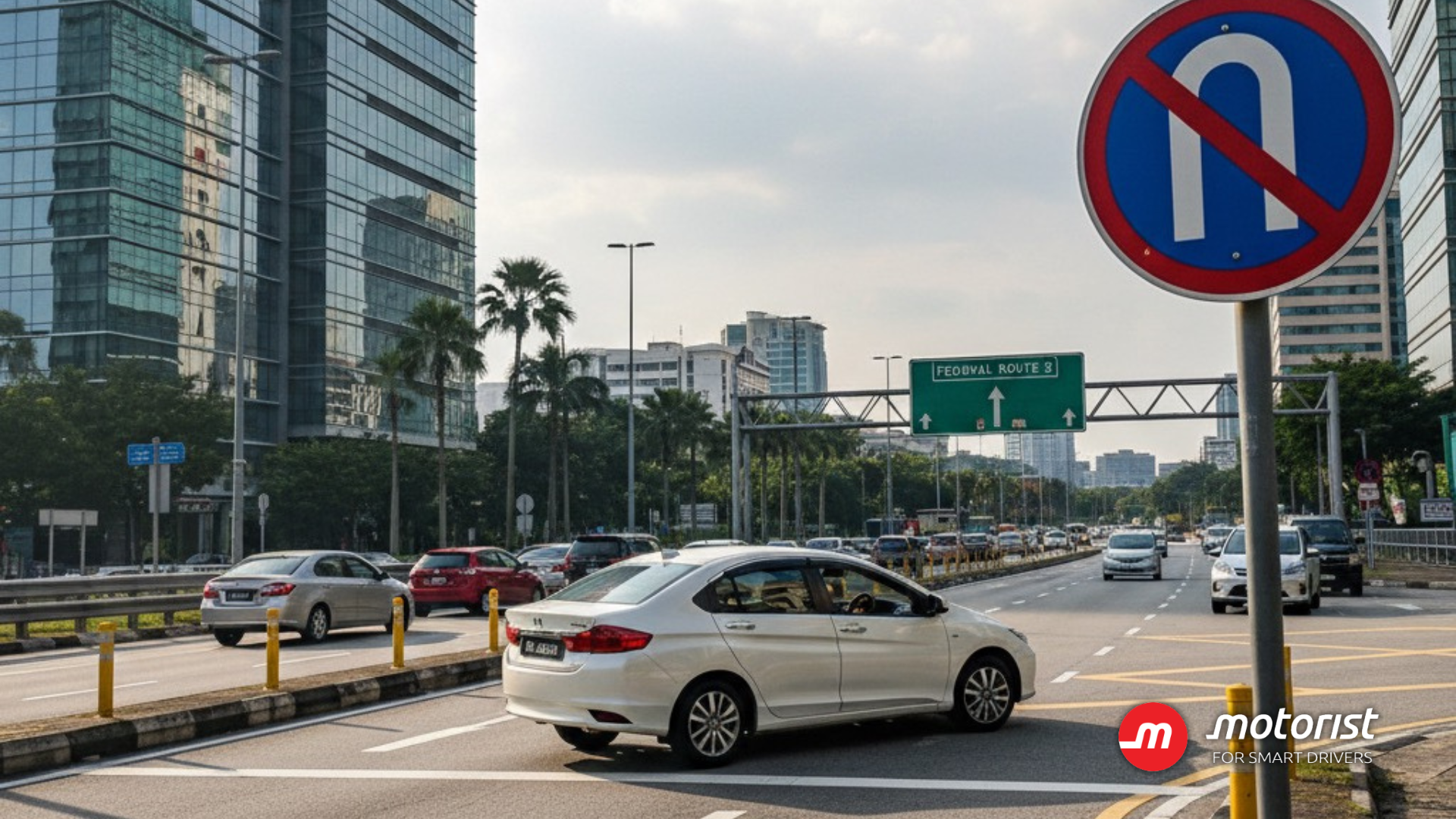
The landscape of Malaysian road safety and traffic enforcement is undergoing its most significant transformation since the inception of the Road Transport Act 1987.
At the center of this transformation is a move toward absolute accountability, characterized by the implementation of a permanent, unified tiered system for summons settlement that took effect on January 1, 2026.2 One of the most common yet hazardous moving violations—executing a U-turn at a prohibited sign—serves as a primary case study for the escalating costs of traffic non-compliance in the modern era.
While a violation of a "No U-Turn" sign historically carried a standard compound of RM 300, the new regulatory framework introduces a temporal dimension where the final cost is dictated by the speed of the offender's response, with consequences extending far beyond mere financial loss to include blacklisting, demerit point accumulation, and the legal inability to renew road tax or driving licenses.
The Statutory Architecture of Traffic Control
The legal authority to penalize an unauthorized U-turn is derived from a complex web of primary and secondary legislation designed to maintain order on the national transport network.
The foundational document, the Road Transport Act 1987 (Act 333), provides the overarching powers for the regulation of motor vehicles and traffic on roads.6 Within this framework, the Road Traffic Rules 1959 (L.N. 166/1959) details specific conduct requirements for motorists.
Rule 13 (K.13) of the Road Traffic Rules 1959 specifically prohibits making a U-turn on a road with a speed limit or where such maneuvers are explicitly barred by signage. The failure to comply with these signs is classified as a serious driving offense, and the compound is set under Section 119(2) of the Road Transport Act 1987.5
This legislative structure is reinforced by the Highway Code and various amendments aimed at enhancing penalties for reckless behavior. An illegal U-turn is often prosecuted under Section 43(1) of the RTA 1987 if the maneuver is deemed to have been performed without due care and attention, potentially leading to court fines of up to RM 10,000 and imprisonment.
The distinction between a standard compoundable offense and a court-referred charge depends heavily on the severity of the obstruction caused and whether an accident occurred as a result of the maneuver.
Classification of Traffic Offenses and Compounding Rates
The Royal Malaysia Police (PDRM) and the Road Transport Department (JPJ) categorize offenses based on their impact on road safety.
The illegal U-turn is typically classified as a Category A or Category B offense, placing it in the same risk bracket as speeding, running red lights, and using the emergency lane.
These classifications are essential for the 2026 tiered system, as they dictate the base compound amount before discounts are applied.
| Offense Category | Examples of Violations | Base Compound Rate |
| Category A | Speeding (>40km/h), Illegal U-turn, Running Red Light, Emergency Lane Usage, Queue Jumping | RM 300.00 |
| Category B | Faulty Brake Lights, Missing Side Mirrors, Signal Light Failure, Carrying Dangerous Cargo | RM 250.00 |
| Category C | Expired Driving License, Failure to Conduct PUSPAKOM, Not Displaying 'P' Plate | RM 150.00 |
| Category D | Minor technical offenses, failing to notify change of address | RM 100.00 |
As shown in the data, the illegal U-turn sits at the highest tier of standard compounds, reflecting the government's view that such maneuvers are inherently dangerous to the public.
The risk profile of a U-turn is significant because it requires a vehicle to cross multiple lanes of traffic, often at a low speed, creating a substantial relative velocity difference between the turning vehicle and oncoming traffic.
The 2026 Tiered Discount System: A Policy Revolution
The introduction of the tiered discount system on January 1, 2026, marks the end of an era of administrative leniency.3For decades, Malaysian motorists adopted a "wait-and-see" strategy, accumulating summonses and waiting for festive season discounts of 50% to 80% to settle their debts.
This behavior resulted in a massive backlog of unpaid fines, estimated at RM 6.6 billion by late 2025.3 To rectify this, Transport Minister Anthony Loke announced a shift to a "The Less You Delay, The Less You Pay" principle, effectively making immediate payment the only way to secure a significant reduction.
The new system is strictly time-sensitive, leaving no room for negotiation after the specific windows have closed. This system applies to both PDRM and JPJ summonses, ensuring a unified enforcement front that eliminates previous misconceptions that different agencies applied the law inconsistently.
The Fiscal Timeline of a Summons
When a motorist is issued a summons for an illegal U-turn in 2026, the cost evolves through four distinct stages. The goal of this structure is to incentivize early settlement while creating a significant financial and legal penalty for those who ignore their obligations.
Payment PeriodApplied DiscountFinal Cost (for RM 300 Base)Legal Status1 – 15 Days50% DiscountRM 150.00Early Bird Reward 116 – 30 Days33% DiscountRM 200.00Standard Settlement 231 – 60 Days0% (Full Amount)RM 300.00Final Warning Period 161+ DaysNo DiscountRM 300.00 + FeesBlacklisting & Court Action 2.
For motorcycles under 250cc, the rates are slightly adjusted to reflect the different socio-economic profiles of riders, though the 61-day threshold for blacklisting remains identical.
A rider who pays within 15 days for an illegal U-turn would pay RM 100, increasing to RM 150 between 16 and 30 days, and hitting the full RM 300 after 31 days.This aggressive escalation is designed to foster a culture of discipline and immediate rectification of road offenses.
The Technological Frontier of Enforcement
The 2026 regulatory framework is supported by a comprehensive digital infrastructure that integrates the Royal Malaysia Police’s MyBayar system with the Road Transport Department’s MySikap database.
This integration ensures that enforcement is seamless and that data regarding violations is shared in real-time between agencies. A primary component of this infrastructure is the Automated Awareness Safety System (AWAS), which utilizes high-resolution cameras to detect speeding and red-light violations, often capturing illegal U-turns performed at intersections.
When an offense is recorded via an AWAS camera, a "Notice 170A" is typically issued.4 These summonses are sent to the registered owner of the vehicle, who is held liable for the fine unless they can provide the identity and address of the driver at the time of the offense within 30 days.
The legal consequences for providing false information regarding the driver are severe, with fines ranging from RM 3,000 to RM 10,000.
This mechanism ensures that the state can always identify a responsible party for every recorded violation.
The Consequences of the 61-Day Threshold
The 61-day mark represents a critical point in the life cycle of a Malaysian traffic summons. Beyond this date, the offense moves from a simple administrative fine to a legal impediment.
The immediate consequence is the placement of the offender’s NRIC and vehicle registration on the JPJ Blacklist.
The impact of being blacklisted is multi-faceted and intentionally disruptive to the daily life of the motorist:
Renewal Blocks: The blacklisted status prevents the renewal of the Motor Vehicle Licence (LKM), more commonly known as road tax.2 Driving without a valid LKM can lead to the vehicle being impounded by authorities.2
Licensing Restrictions: The offender cannot renew their Competent Driving Licence (CDL), and continued driving with an expired license is a non-compoundable offense that leads directly to a court appearance.2
Ownership Impediments: A blacklisted vehicle cannot undergo a transfer of ownership (JPJ K3), effectively making the car unsellable on the secondary market until all debts are cleared.1
KEJARA Integration: In the 2026 framework, demerit points under the KEJARA system are logged upon the expiration of the 60-day summons period, regardless of whether the fine has been paid.2
Accumulating points under the KEJARA system leads to a series of escalating sanctions:
Official Warnings: Triggered at initial point thresholds.
Suspension: A temporary withdrawal of driving privileges.
Revocation: The total cancellation of the driving license for habitual offenders.2
Socio-Economic and Public Health Implications
The stringent enforcement of U-turn regulations is not merely a revenue-generating exercise but a vital public health intervention. Road traffic crashes are the leading cause of accidental death in Malaysia, with an average of over 6,500 lives lost annually.
The Malaysian Government has set an ambitious goal to reduce these fatalities by 50% by the year 2030, a target that requires a fundamental shift in driver behavior.
The economic burden of road fatalities is staggering. Based on the Value of Statistical Life (VSL) estimates, each road death costs the Malaysian economy approximately RM 3.12 million in healthcare costs, lost productivity, and administrative expenses.18 This translates to a total national loss of nearly RM 19.7 billion every year.
Illegal U-turns contribute significantly to this burden, particularly in urban areas where they often involve collisions with vulnerable road users, such as motorcyclists and pedestrians.
The Vulnerability of Children on Malaysian Roads
Statistics from the Malaysian Institute of Road Safety Research (MIROS) indicate that between 2014 and 2023, an average of 434 children were killed annually in road accidents.21 This is more than one child dying every single day on Malaysian roads.21 Many of these accidents are preventable and occur due to reckless maneuvers like illegal U-turns in school zones or residential neighborhoods.22
The immaturity and small stature of children make them particularly susceptible to injury when drivers fail to adhere to traffic signs. A child's visibility is lower, and their ability to judge the speed of a vehicle performing a complex maneuver like a U-turn is limited.22 The impact of an injury on a child is also more profound, often leading to lifelong disabilities that impede their social and educational development.22 Authorities emphasize that proactive measures, such as the mandatory use of Child Restraint Systems (CRS) and the strict enforcement of turning rules, are essential to achieving "Vision Zero" road fatalities.18
Case Studies in Unauthorized U-Turns
Real-world incidents documented in late 2025 and early 2026 highlight the dangers of the "convenient" U-turn. In Johor Bahru, a near-collision involving a Singapore-registered car that abruptly made an illegal U-turn on a one-way street demonstrated how such actions endanger entire families.12 The Malaysian driver involved in the incident reported that his wife and infant were in the car, and only immediate emergency braking prevented a serious crash.12
Heavy vehicles pose a particularly acute risk. A trailer lorry in Sungai Buloh attempting an unauthorized U-turn collided with a parked Proton Saga, leading to an investigation under Section 43(1) of the RTA 1987.8 While no injuries were reported in that instance, a similar maneuver on the Malaysia-Singapore Second Link resulted in the death of a motorcyclist after a supercar struck a center guardrail during an illegal U-turn, causing the rail to dislodge and obstruct the opposite lane.23 These cases underscore that an illegal U-turn is not a victimless "shortcut" but a high-risk gamble with the lives of others.
Administrative Navigation: Checking and Settling Summonses
In the high-stakes environment of 2026, staying informed about one's summons status is a critical component of responsible vehicle ownership. Authorities have provided several channels for checking and paying fines, emphasizing that "busy with work" is no longer an acceptable legal excuse for non-payment.2
Digital Portals and Mobile Applications
The modern motorist can access their records through several government-authorized platforms:
MyBayar Saman: Developed by PDRM, this platform is the primary tool for checking and paying police summonses without additional service charges.10
MyJPJ App: This mobile application provides a centralized location for JPJ and AES summons checks, as well as digital road tax and license views.14
mySIKAP Portal: The Road Transport Department’s official portal for comprehensive vehicle and driver records, including summons management.14
MyEG Services: A long-standing electronic service provider that allows users to check for PDRM, JPJ, and AES summonses in one location.26
PlatformAgency CoverageKey FeaturesMyBayar SamanPDRMNo service fees; fast online payment.10MyJPJJPJ, AES/AWASMobile-friendly; digital road tax access.14mySIKAPJPJFull vehicle details; registration history.14MyEGPDRM, JPJ, AESOne-stop center; email notifications.
For those who prefer offline methods, JPJ kiosks and physical counters remain available, though these are increasingly seen as secondary to the convenience of digital settlement.It is important to note that certain special discounts, such as the flat RM 150 rate for selected JPJ notices in early 2025, were only payable via official JPJ channels and not through third-party providers like MyEG or Pos Malaysia.
Strategic Vehicle Management with Motorist Malaysia
As the 2026 regulations tighten the noose around non-compliant drivers, the administrative burden of managing a vehicle has increased significantly.
Motorist Malaysia has emerged as a critical ally for drivers, offering a "Super App" ecosystem designed to automate vehicle management and protect owners from the pitfalls of the tiered discount system.29 By positioning itself as an all-in-one "AutoConcierge," Motorist Malaysia helps drivers navigate the complexities of traffic laws while providing tools to enhance the ownership experience.
Proactive Monitoring and Fine Alerts
One of the most effective features of the Motorist App is its real-time summons and fine alerts.28 In the era of the 15-day 50% discount window, every hour counts. The app monitors official databases and notifies the user the moment a new summons is issued to their vehicle registration.
This proactive alert system allows the driver to settle the fine immediately, ensuring they pay the lowest possible amount (e.g., RM 150 for a Category A offense) and completely avoiding the risk of blacklisting.
Beyond fine alerts, the app provides a suite of management tools:
Reminders: Users receive timely notifications for the expiry of road tax and car insurance, preventing common violations that lead to immediate blacklisting.
Co-Driver Feature: This innovative tool provides real-time audio alerts when a driver is approaching speed cameras or red-light cameras, encouraging more responsible driving behavior and preventing the issuance of a summons in the first place.
Fuel Price Alerts: Keeping users informed of the latest petrol prices and discounts to help manage the operational costs of the vehicle.
Seamless Vehicle Transactions and Valuation
For many motorists, the ultimate "pain point" of the 2026 system is the inability to sell their car due to outstanding summonses.Motorist Malaysia facilitates a "fresh start" by offering professional transaction services that handle all necessary paperwork and negotiation.
The vehicle valuation and sale process through Motorist Malaysia is designed to be efficient and transparent, typically completed within 24 to 48 hours.
StepActionMechanism1. Submit DetailsOwner provides car information via app/WhatsApp.Data collection for proprietary bidding system.302. 24-Hour ValuationNetwork of 600+ dealers bid on the vehicle.Motorist relays the highest offer to the owner.303. Arrange ViewingConsultant locks price and arranges non-obligation viewing.Verification of car condition before final sale.
This service is entirely free for the seller, ensuring they retain 100% of the sale proceeds.30 For those with blacklisted vehicles, the Motorist team provides personalized support to resolve JPJ and PDRM holds, ensuring that the ownership transfer (JPJ K3) can proceed legally once all fines are settled.
Insurance Sourcing and Financial Protection
Understanding the Malaysian motor insurance landscape is crucial for maintaining legal compliance. Motorist Malaysia acts as a single point of contact for sourcing competitive insurance quotes from trusted partners like Etiqa General Takaful and Takaful Malaysia.30 This is essential because driving without insurance is a non-compoundable offense that leads directly to court action, bypassing the standard tiered discount system.
The platform assists users in choosing the right level of coverage:
Comprehensive Cover: Protecting against accidental damage, fire, and theft.32
Third-Party Fire and Theft: A mid-level option covering claims against others and specific vehicle loss.32
Third Party Only: The most basic legal requirement covering liability for injury or death to others.33
Motorist Malaysia also provides administrative support for vehicle loans, helping buyers apply for financing from major Malaysian banks with approval typically taking three to five days.30 This end-to-end service includes the settlement of outstanding loans for sellers and the management of all necessary transfer documentation, making it an essential resource for those navigating the strict new regulatory environment.30
Conclusion: The Imperative of Compliance
The message from the Malaysian government in 2026 is unambiguous: the safety of the public is paramount, and the costs of non-compliance will be enforced with digital precision.
An illegal U-turn at a prohibited sign is no longer just a RM 300 inconvenience; it is a gateway to a cascade of financial and legal consequences that can restrict a citizen's ability to drive, work, and manage their assets.The "Pay Early, Save More" system places the responsibility for financial mitigation firmly in the hands of the motorist.
As the country strives to achieve its "Vision Zero" goals, every driver must internalize the importance of adhering to basic traffic rules.18 The technological integration of enforcement agencies means that escaping the system is no longer a viable strategy. Instead, the modern driver must adopt proactive management tools to stay ahead of the curve. Motorist Malaysia offers the most comprehensive solution for this new era, providing the alerts, valuation, and administrative support necessary to navigate the roads of tomorrow with confidence.
By downloading the Motorist App today, Malaysian drivers can ensure they stay informed, stay legal, and stay safe on every journey."
Read More: What happens if summons still not paid after January 2026?
I want to find the highest selling price for my car within 24 hours!
Download the Motorist App now. Designed by drivers for drivers, this all-in-one app lets you receive the latest traffic updates, gives you access to live traffic cameras, and helps you manage vehicle related matters.